Last updated: June 2026
DeepSeek in Africa matters because it offers a cheaper, more accessible route into advanced AI for startups, developers and public institutions. Its rise could accelerate local innovation, especially in finance, education, health and African language technology. But it also raises serious questions about data privacy, cybersecurity, foreign dependency and digital sovereignty.
DeepSeek has become one of the most important AI stories for African technology markets because it challenges a long-held assumption: that only heavily funded U.S. technology companies can build and distribute powerful AI systems. DeepSeek-R1, released in January 2025, was presented by DeepSeek as a reasoning model with MIT-licensed code and model weights. DeepSeek also stated that API outputs can be used for fine-tuning and distillation, which makes the model useful for experimentation and derivative systems, subject to the relevant licenses and terms, making it easier for developers to experiment, fine-tune and build derivative systems.
For Africa, the timing is critical. AI adoption is growing globally, but the benefits remain uneven. Microsoft’s AI Economy Institute reported that global generative AI adoption reached 16.3% in the second half of 2025, while the Global North remained ahead of the Global South, with 24.7% versus 14.1% adoption among working-age populations. The same report noted DeepSeek’s rising popularity across Africa, aided by accessibility, free chatbot access and promotion through partners such as Huawei.
This does not mean DeepSeek is automatically the best AI platform for every African business or government. The real question is more strategic: can African countries use DeepSeek and similar affordable AI models to build local capability without becoming dependent on another foreign technology stack?
Key Takeaways
- DeepSeek could reduce the cost of AI experimentation for African startups, developers and universities.
- Its open-weight and MIT-licensed R1 model makes local fine-tuning and distillation more realistic, but “open source” should be used carefully and with licensing context.
- Data privacy is a major concern because DeepSeek’s privacy policy states that personal data may be stored and processed in the People’s Republic of China.
- The biggest opportunity is not simply using DeepSeek, but adapting AI for African languages, sectors and governance needs.
- Africa’s long-term advantage will depend on compute, connectivity, context-specific data, skills and strong AI governance.
What Is DeepSeek and Why Does It Matter for Africa?
DeepSeek is a Chinese AI company that became globally prominent after releasing DeepSeek-R1, a reasoning-focused large language model. DeepSeek’s official release notes describe R1 as a model designed for reasoning tasks, with code and models released under the MIT License and API outputs available for fine-tuning and distillation.
The reason this matters for Africa is simple: cost and access shape AI adoption. Many African startups and research teams do not have the budget to train frontier models from scratch, pay for heavy enterprise subscriptions or run large-scale GPU clusters. Carnegie Endowment analysis argued that DeepSeek-R1 changed perceptions about the cost of developing powerful AI and opened a wider discussion about what African governments, developers and startups could build with efficient models.
Still, DeepSeek should not be treated as a magic shortcut. Even if a model is cheaper to use or easier to adapt, organizations still need reliable data, cloud access, cybersecurity controls, local language resources, skilled developers and responsible deployment policies. The World Bank’s 2025 Digital Progress and Trends Report describes AI readiness around four foundations: connectivity, compute, context and competency. Those four factors are especially relevant to AI adoption in Africa.
In other words, DeepSeek matters because it lowers one barrier. It does not remove all barriers.
Why DeepSeek Is Gaining Attention Across African Markets
The phrase “DeepSeek in Africa” is gaining search interest because it sits at the intersection of affordability, open AI, Chinese technology influence and the need for practical tools in emerging markets.
First, DeepSeek is attractive because it is accessible. Microsoft’s 2026 AI adoption analysis said DeepSeek removed financial and technical barriers through an MIT-licensed model and a free chatbot, helping it gain traction in markets underserved by traditional providers, reporting on that Microsoft analysis, noted that DeepSeek’s share in some African countries, including Ethiopia, Zimbabwe, Uganda and Niger, was estimated between 11% and 14%.
Second, price sensitivity is real. African Business reported that cheaper AI technology from China creates opportunities for African firms, while also warning about the danger of over-reliance. The same report noted that cost has been one of the major barriers to AI adoption for African companies that depend on foreign cloud suppliers.
Third, DeepSeek is arriving through an ecosystem, not just a website. Huawei Cloud offers deployment guidance for DeepSeek-R1 distilled models on its cloud infrastructure, and Microsoft’s AI Economy Institute specifically linked DeepSeek’s Africa momentum to strategic promotion and partnerships with firms such as Huawei.
For distilled models, developers should also review the upstream Qwen or Llama license terms where applicable.
Fourth, Africa is not one market. South Africa, Kenya, Nigeria, Egypt, Morocco, Ethiopia, Ghana and Rwanda have different levels of cloud infrastructure, startup depth, regulation and enterprise AI demand. ITU data shows that Africa remains highly heterogeneous in internet use, with overall internet penetration at 38% in 2024, far below the global average of 68%.
That is why DeepSeek may grow quickly in some markets while remaining marginal in others.
Opportunities for African Startups, Developers and Businesses
The opportunity is not that every African organization should switch to DeepSeek. The opportunity is that DeepSeek gives builders another tool in a more competitive AI market.
Fintech and Financial Inclusion
African fintech companies could use models like DeepSeek-R1 to support customer service, credit-assessment workflows, fraud triage, financial education and multilingual onboarding. The strongest use cases will be narrow and supervised, not fully autonomous lending decisions. In finance, AI should assist humans, not replace compliance, risk management or consumer protection.
Education and Tutoring
Affordable AI can help teachers generate lesson plans, translate learning materials and provide tutoring support where teacher shortages are severe. However, education deployments must be locally evaluated. A model that performs well in English may still misunderstand local curricula, cultural context or African languages.
Healthcare Triage and Rural Support
DeepSeek-style models could help clinics summarize patient intake, support health education and guide non-diagnostic triage scripts. They should not be used as independent medical authorities. For African health systems, the safest deployments will be human-in-the-loop, auditable and trained around local protocols.
Agriculture and Climate Adaptation
Farmers and agribusinesses could use AI assistants for weather interpretation, pest guidance, market information and extension support. The challenge is that advice must be localized by crop, soil type, rainfall pattern, language and region. Generic model outputs can be dangerous when they sound confident but ignore local agronomy.
Customer Support in Local Markets
Banks, telecoms, logistics firms, utilities and e-commerce companies can use AI to handle routine customer requests. This is one of the most immediate business cases because it can reduce waiting times and support multiple languages. But customer support systems need privacy safeguards, clear escalation routes and transparency when users are interacting with AI.
Public-Sector Productivity
Governments could use AI to summarize documents, draft public communications, improve service portals and analyze non-sensitive public data. Sensitive use cases, such as citizen records, security operations, procurement or tax information, require much stricter controls and may be better suited to private, local or sovereign deployments.
Developer Tools and Software Engineering
For African developers, DeepSeek’s strongest appeal may be coding support. DeepSeek’s release notes highlight math, code and reasoning capabilities, and Carnegie’s analysis argues that African developers could use R1’s architecture to build locally adapted solutions in sectors such as finance, healthcare, education and governance.
Opportunities vs Risks of DeepSeek in Africa
| Area | Opportunity | Risk |
|---|---|---|
| Cost | Lower-cost experimentation for startups, universities and SMEs | Hidden costs from cloud hosting, security, integration and compliance |
| Open AI | MIT-licensed R1 weights support modification, commercial use and distillation | Not every related model, dataset or deployment path has the same openness |
| Local languages | Potential fine-tuning for Swahili, Hausa, Yoruba, Amharic, isiZulu and other languages | Poor performance if models are not trained and evaluated on local data |
| Business adoption | Faster prototyping in fintech, education, agriculture and customer service | Overreliance on foreign AI providers and weak vendor due diligence |
| Public sector | Productivity gains in non-sensitive administrative tasks | Data sovereignty, surveillance, cybersecurity and procurement concerns |
| Global competition | More choices beyond OpenAI, Google Gemini, Meta Llama and Microsoft tools | Africa could become a battleground for external AI influence rather than a producer of AI |
The African Language Opportunity
The most important long-term opportunity for DeepSeek in Africa may be language.
Africa has thousands of languages, but most large AI systems perform best in English and other high-resource languages. IrokoBench, a major benchmark for African languages, evaluated large language models across 17 low-resource African languages and found a significant performance gap between high-resource languages such as English and French and low-resource African languages.
This matters because language is not just translation. A model that misunderstands Yoruba, Hausa, Swahili, Amharic, isiZulu, isiXhosa, Wolof, Luganda or Somali may also misunderstand local idioms, legal concepts, health advice, agricultural terms and cultural context.
DeepSeek could help if African developers use it as a base for fine-tuning, retrieval-augmented generation and domain-specific assistants. But this will require high-quality local datasets, language experts, evaluation benchmarks and African-led NLP communities. Groups such as Masakhane already work to strengthen NLP research in African languages by Africans and for Africans.
There is also growing competition around African language AI. Reuters reported that Orange enlisted OpenAI and Meta to fine-tune models for regional African languages, initially focusing on West African languages through tools such as Whisper and Llama. Microsoft and G42 also announced a Kenya-focused digital investment package that included work on Swahili-English AI models.
For African language AI, the winner should not be whichever foreign model arrives first. The winner should be the ecosystem that helps African researchers, startups and institutions control the data, evaluation and deployment of their own language technologies.
Risks: Data Privacy, Cybersecurity and Digital Sovereignty
DeepSeek’s biggest risk in Africa is not that it is Chinese. The bigger issue is whether African organizations understand where their data goes, how it is processed and what legal protections apply.
DeepSeek’s privacy policy states that personal data collected from users may be stored outside the user’s country and that DeepSeek directly collects, processes and stores personal data in the People’s Republic of China. It also says users should take special care in deciding what personal data they send through the services.
If African startups, universities, or public institutions build applications on the direct DeepSeek API, they should also review DeepSeek’s Open Platform Terms. Those terms place responsibility on developers to disclose personal-information processing rules to end users, obtain consent or another legal basis where required, and maintain organizational and technical safeguards for their downstream applications.
That statement should be enough to trigger serious due diligence for African banks, telecoms, hospitals, universities, law firms and public agencies. Sensitive prompts can contain customer records, trade secrets, government information, health data, national security details or personal identifiers.
Several governments and regulators outside Africa have scrutinized or restricted DeepSeek over security and privacy concerns. Reuters reported that Australia banned DeepSeek from government devices, while Germany asked Apple and Google to remove DeepSeek from app stores over data-safety concerns.
This does not mean every African organization must ban DeepSeek. It means every organization should classify data before using it.
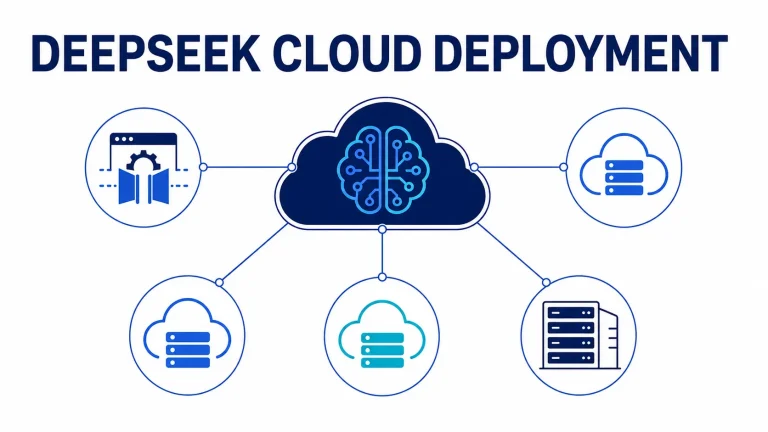
For low-risk tasks such as brainstorming public marketing copy, drafting generic code examples or summarizing non-confidential documents, a public AI tool may be acceptable. For regulated data, sensitive government work or customer records, organizations should consider private deployment, local hosting, enterprise controls, strict data-processing agreements or alternative models that meet local compliance requirements.
African policymakers also need procurement standards. AI vendors should be assessed for data residency, logging, model behavior, security testing, incident response, explainability, local legal compliance and exit options. Data sovereignty is not only about where servers sit. It is also about who controls the model, the data pipeline, the audit logs, the application layer and the long-term dependency.
DeepSeek and the US-China AI Competition in Africa
DeepSeek has turned AI adoption in Africa into part of a wider technology competition.
For years, U.S. and Western firms such as Microsoft, OpenAI, Google and Meta have shaped much of the global AI stack through cloud infrastructure, foundation models, developer tools and enterprise software. Chinese firms such as Huawei have played a major role in African telecoms, cloud and digital infrastructure. DeepSeek adds a new layer: a Chinese AI model that competes not only on capability, but on affordability and access.
Microsoft’s AI Economy Institute described DeepSeek’s rise as part of a broader AI competition between the United States and China, involving a race to promote adoption of national models. CSIS similarly argued that DeepSeek’s breakthrough shows the AI race is continuous and that smaller, more specialized models may become more affordable, expanding market competition.
Africa should not approach this competition passively. The continent needs more options, not fewer. A healthy AI market should allow African organizations to compare DeepSeek, OpenAI, Google Gemini, Meta Llama, Microsoft Azure AI, Huawei Cloud and local African models based on cost, safety, language performance, data rights and deployment flexibility.
Microsoft is responding with infrastructure and skills investments. It announced an AI skilling initiative to train one million South Africans by 2026 and later announced plans to invest ZAR 5.4 billion by the end of 2027 to expand cloud and AI infrastructure in South Africa.
The strategic lesson is clear: competition can benefit Africa if it lowers prices, improves local language support and expands infrastructure. It can hurt Africa if countries become locked into foreign systems without building domestic capability.
What African Governments and Businesses Should Do Next
African governments, startups and enterprises should treat DeepSeek as a catalyst, not a destination.
Practical Checklist for African Organizations Considering DeepSeek
- Define the use case clearly: customer support, coding, research, education, translation or internal productivity.
- Classify the data: public, internal, confidential, regulated or highly sensitive.
- Read the privacy policy and terms before using any public chatbot or API.
- Test model performance on local languages, local names, local laws and sector-specific content.
- Use human review for finance, health, legal, education and public-sector outputs.
- Compare DeepSeek with alternatives such as OpenAI, Google Gemini, Meta Llama, Microsoft Azure AI and locally hosted open models.
- Avoid entering personal data, customer records or government-sensitive information into public systems.
- Consider private deployment or local hosting for sensitive use cases.
- Require vendor documentation on security, logging, retention, incident response and data processing.
- Build an exit plan so the organization is not locked into one provider.
Governments should go further. They should support national AI testing labs, public-interest datasets, African language benchmarks, startup compute credits and regulatory sandboxes. They should also align AI policy with the African Union’s Continental AI Strategy, which was endorsed in July 2024 and emphasizes an Africa-centric, development-focused, ethical and responsible approach to AI.
Businesses should start with measurable productivity use cases. The best early deployments will be narrow, useful and safe: call-center summarization, internal knowledge search, software support, document drafting and multilingual content workflows. The worst deployments will be vague “AI transformation” projects with no data governance.
Universities and research institutions should use DeepSeek and other open-weight models to train talent. Students need hands-on experience with model evaluation, prompt engineering, retrieval systems, fine-tuning, privacy engineering and multilingual NLP. Africa’s AI future depends more on builders than on chatbots.
Future Outlook: Will DeepSeek Become Africa’s AI Shortcut?
DeepSeek may become an important AI shortcut for African developers, but it will not become Africa’s full AI strategy.
Its main value is that it proves powerful AI can be more affordable, more accessible and more adaptable than many people assumed. That could help African startups prototype faster, universities teach more effectively and local AI communities experiment with models that once felt out of reach.
But shortcuts have limits. Africa still needs affordable internet, reliable electricity, regional data centers, cloud competition, local language datasets, cybersecurity talent and AI governance. ITU data shows that connectivity gaps remain severe, while the World Bank stresses that AI readiness depends on connectivity, compute, context and competency together.
The future of DeepSeek in Africa will therefore depend on how it is used. If it becomes just another imported platform, it may deepen dependency. If it becomes a tool for African developers to build local products, evaluate local languages and strengthen local AI capacity, it could be part of a more balanced digital future.
Conclusion
DeepSeek in Africa is not only a story about a Chinese AI model. It is a story about access, cost, language, infrastructure and power.
For startups, DeepSeek can lower experimentation costs. For governments, it can sharpen the urgency of AI governance. For developers, it can open new paths to build local tools. For citizens, it raises important questions about privacy and digital rights.
The best African response is not to embrace DeepSeek blindly or reject it reflexively. The best response is to test it carefully, govern it responsibly, compare it with alternatives and use it to strengthen African AI capability on African terms.
FAQs About DeepSeek in Africa
1. What is DeepSeek in Africa?
DeepSeek in Africa refers to the growing interest in using DeepSeek’s AI models and chatbot tools across African markets. It includes startup adoption, developer experimentation, local language AI, enterprise use cases, public-sector questions and broader debates about Chinese AI in Africa.
2. Why are African startups interested in DeepSeek?
African startups are interested in DeepSeek because it is accessible, relatively affordable and easier to experiment with than many closed enterprise AI systems. DeepSeek-R1’s MIT-licensed model weights also make it attractive for developers who want to modify, fine-tune or build on top of an existing model.
3. Is DeepSeek safe for African businesses?
DeepSeek may be suitable for low-risk tasks, but African businesses should not enter confidential, regulated or personal data into public AI tools without proper review. DeepSeek’s privacy policy says personal data may be processed and stored in China, so organizations should conduct privacy, legal and cybersecurity assessments before adoption.
4. Can DeepSeek help African languages?
Yes, but only if it is adapted and evaluated properly. DeepSeek could be fine-tuned or combined with local datasets for languages such as Swahili, Hausa, Yoruba, Amharic, isiZulu and others. However, research such as IrokoBench shows that large language models still perform much worse on many African languages than on English and French.
5. How does DeepSeek compare with ChatGPT in Africa?
DeepSeek’s main advantages are affordability, open-weight access for R1 and low barriers to experimentation. ChatGPT, from OpenAI, may offer stronger product maturity, enterprise integrations and broader user familiarity in many markets. The better choice depends on use case, language, privacy, budget, deployment model and required accuracy.
6. What are the main risks of using DeepSeek in Africa?
The main risks are data privacy, cross-border data transfer, cybersecurity, model bias, weak local-language performance, possible censorship concerns, vendor lock-in and overdependence on foreign AI infrastructure.
7. Should African governments use DeepSeek?
African governments should not use public DeepSeek services for sensitive state data without strict review. They may test DeepSeek for low-risk productivity tasks, research and education, but any public-sector deployment should follow procurement rules, data-protection law, cybersecurity standards and the African Union’s responsible AI principles.
Government deployments should also evaluate data residency, procurement requirements, security controls, auditability, and local legal obligations before selecting any AI provider.
8. What is the future of DeepSeek in Africa?
DeepSeek is likely to remain part of Africa’s AI conversation because it offers affordable access and challenges Western AI pricing models. Its long-term impact will depend on whether African institutions use it to build local capability, support African languages and strengthen sovereign AI ecosystems.